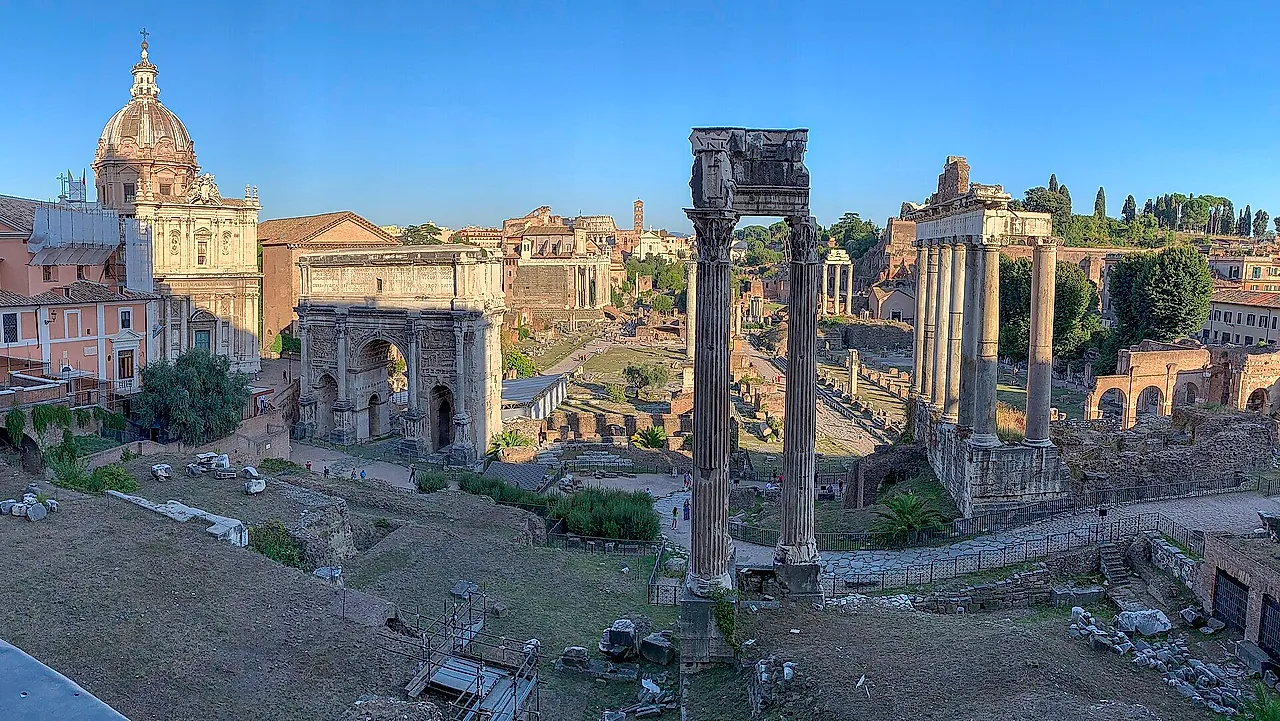
Rome · Via Sacra · Palatine Hill
Roman Forum and Palatine Hill: tickets, hours and how to get there
Temples, arches and basilicas of ancient Rome's centre, and the hill of the imperial palaces. Which ticket to choose, the entrances, the SUPER sites and the seasonal hours.
Today
Opening hours for every month are on the Opening hours page.
Checked against the official website on 23 October 2026 · Official source
In short
- The 24-hour ticket for the Colosseum, the Roman Forum and the Palatine Hill costs 18 € and gives one entry to the Forum and Palatine area at a time of your choice, on the same day or within 24 hours before or after your Colosseum time. The Forum Pass SUPER, also 18 €, covers the Forum, the Palatine and the SUPER sites for one day, but not the Colosseum.
- The Forum and Palatine open at 9:00. Closing runs from 16:30 in winter to 19:15 in summer, with the last entry one hour earlier; the SUPER sites open from 9:30. The Park is closed on 25 December and 1 January.
- The SUPER sites include the Temple of Romulus, Santa Maria Antiqua, the Curia Iulia, the Palatine Museum, the House of Augustus and others, with limited numbers. They need the Forum Pass SUPER or a 4 € supplement to the 24-hour ticket. The House of Livia is closed for restoration, and the Domus Transitoria is not open to visitors.
- Our partner Tiqets, a third party, sells a Forum and Palatine ticket with a 25-minute video at 38 € (price seen on 23 October 2026), and combined tickets with the Colosseum. The cards say what each product adds to the official ticket.
- The main Forum entrance is in Largo della Salara Vecchia 5/6, about 440 m from the Colosseum in a straight line, and the Palatine entrance is in via di San Gregorio 30. Metro line B stops at Colosseo.
The Via Sacra and the Arch of Titus
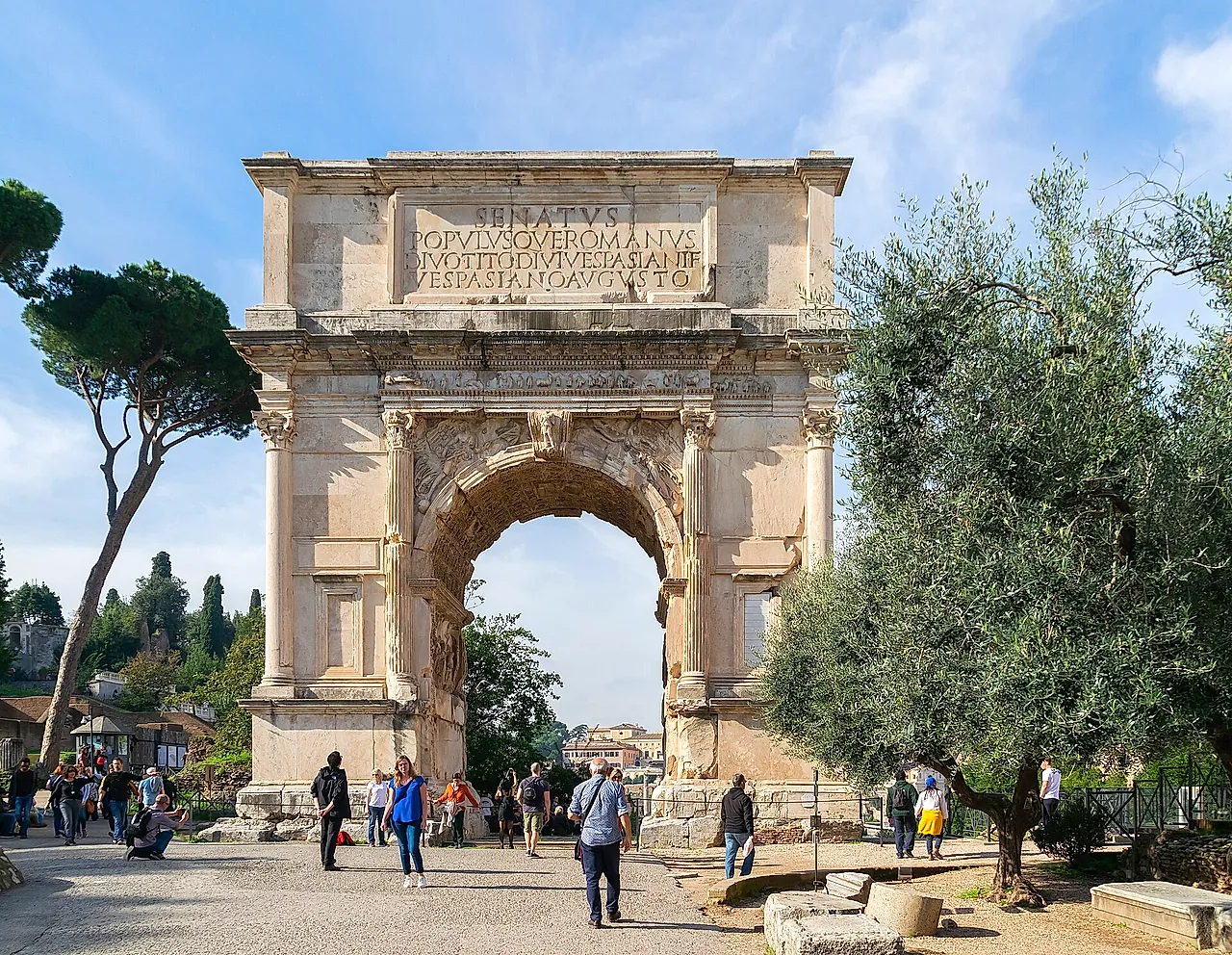
The Arch of Titus stands at the top of the Velia, at the foot of the Palatine. According to Baedeker (1909) it commemorates the victory over the Jews in 70 AD and was dedicated to Titus under Domitian in 81. The arch is one of the Park's entrances.
The Via Sacra can also be reached from Piazza del Colosseo, according to the Park.
The Arch of Septimius Severus, the Curia and the Column of Phocas
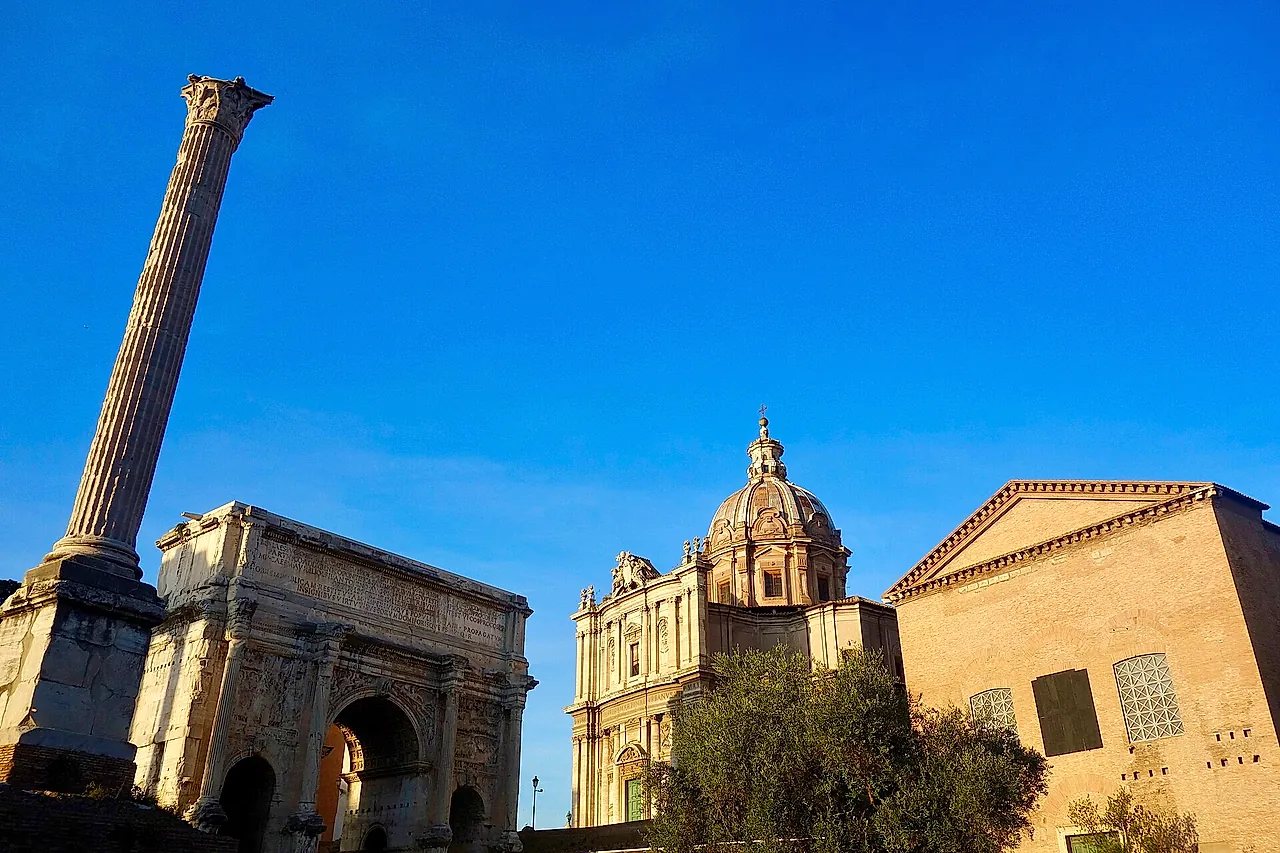
The Arch of Septimius Severus dates from 203 AD and celebrates victories over the Parthians. Baedeker (1909) calls it a triumphal arch 75 feet high, unearthed under Pius VII in 1803. The Column of Phocas, the last monument of the Forum, dates from 608 AD.
The Curia Iulia was built by Caesar, according to Baedeker, and became the church of Sant'Adriano in the Middle Ages. It is a SUPER site.
The Temple of Saturn and the Rostra
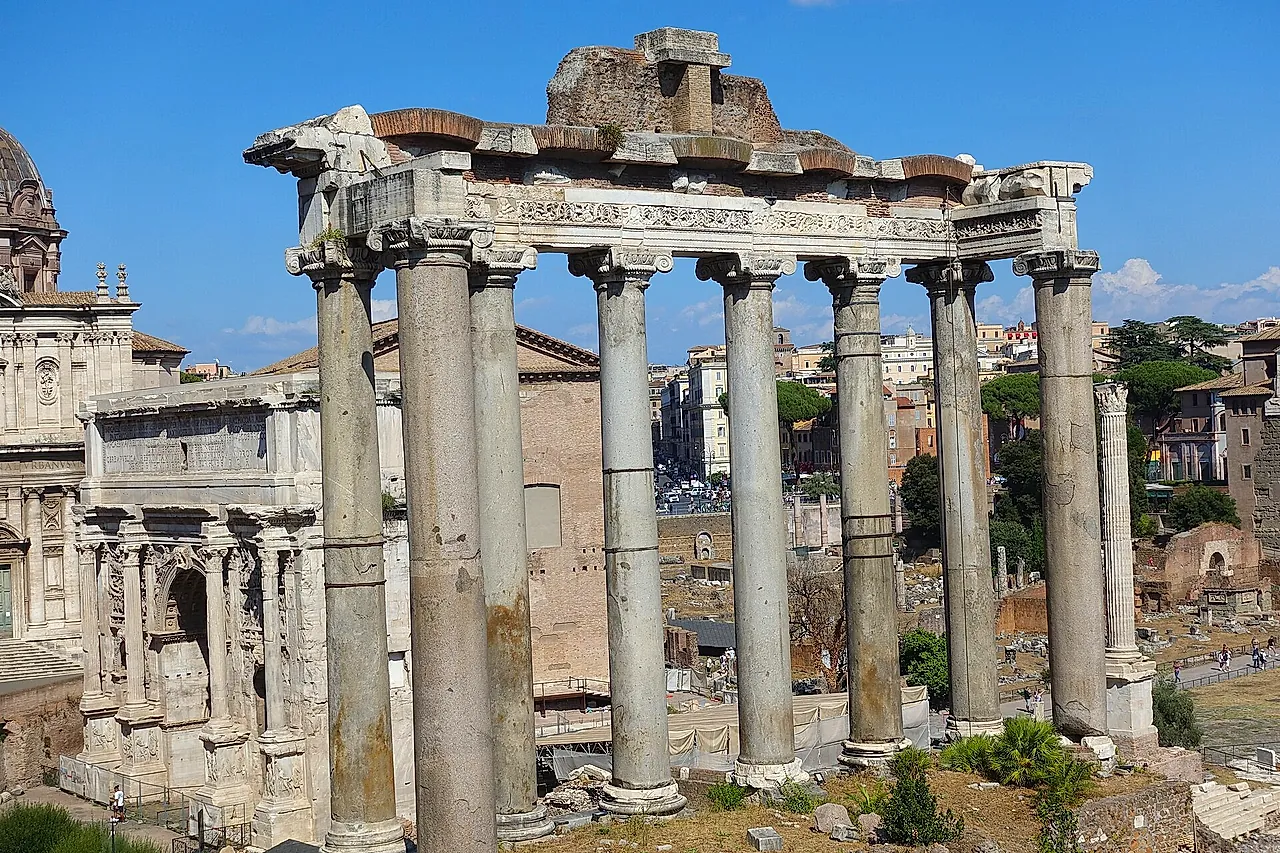
Eight columns of the Temple of Saturn still stand on a high base. Baedeker (1909) says the temple was consecrated in 497 BC and housed the Aerarium, the public treasury.
Nearby are the remains of the Rostra, the orators' platform built by Augustus, 78 feet long and 40 feet wide according to Baedeker. He says the facade was restored in 1904 and only the last courses of blocks are antique.
The Basilica of Maxentius
Three huge arches survive of the basilica begun by Maxentius and altered by Constantine, along the Via Sacra on the side facing the Colosseum. Baedeker (1909) notes that its vast vault served as a model for modern architects.
The House of the Vestals and the Lapis Niger
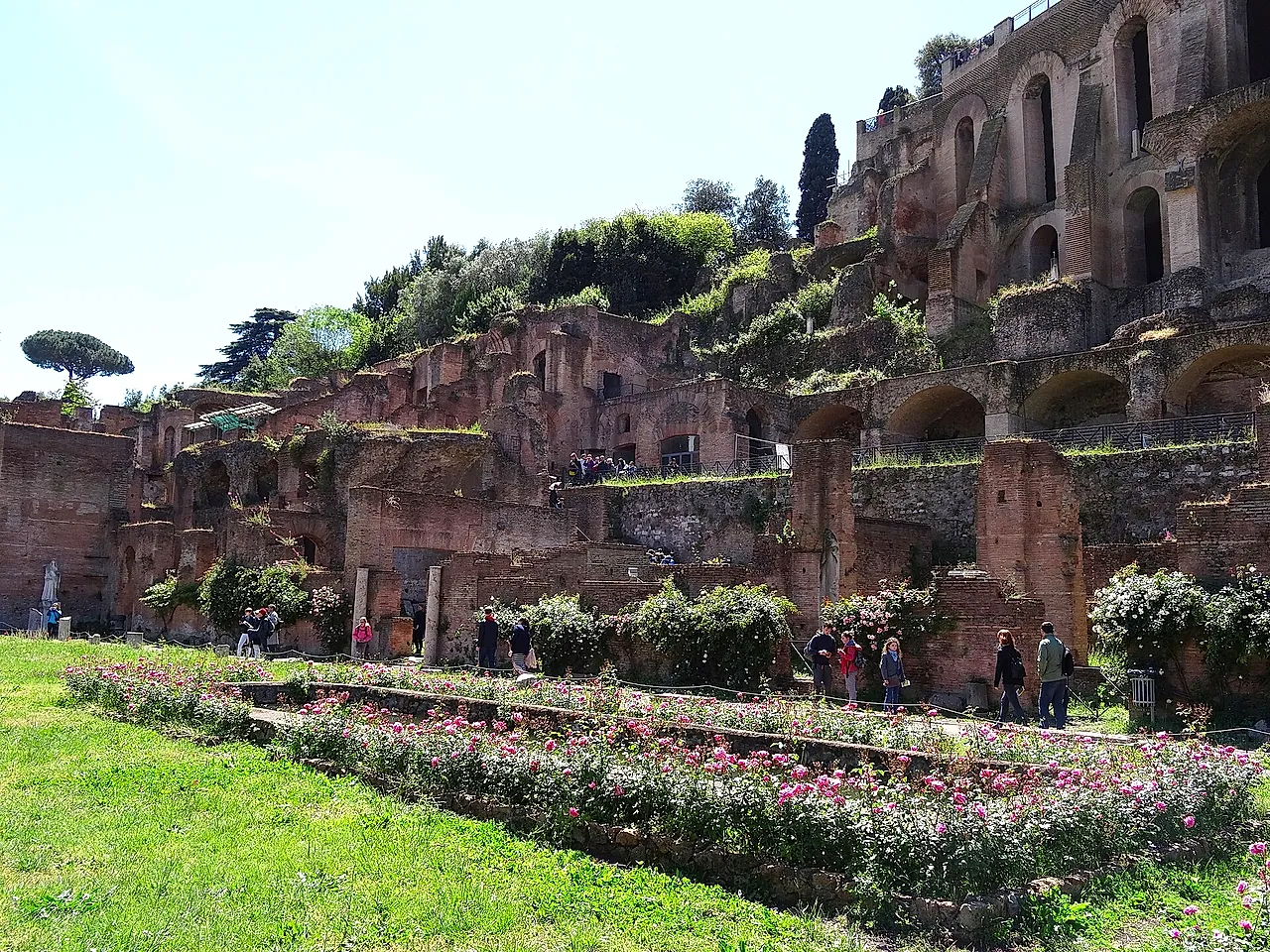
The Temple of Vesta was where the Vestals kept the sacred fire; Baedeker (1909) says it was restored after a fire early in the 3rd century. The House of the Vestals is one of the places the Park lists with the Forum Pass SUPER.
The Lapis Niger is a black marble pavement over a stele with the oldest known Latin inscription, from the 6th century BC, according to Baedeker.
Domus Flavia and Domus Augustana on the Palatine
The Palatine was the home of the emperors, and the word palatium became a synonym for a residence. In the Park's wording the Domus Flavia was the public wing and the Domus Augustana the private one. Baedeker (1909) writes that what visitors call the Domus Flavia is probably a later reconstruction by Domitian.
The parts you can visit are the state apartments. The private rooms lie below the former Villa Mills.
The Stadium
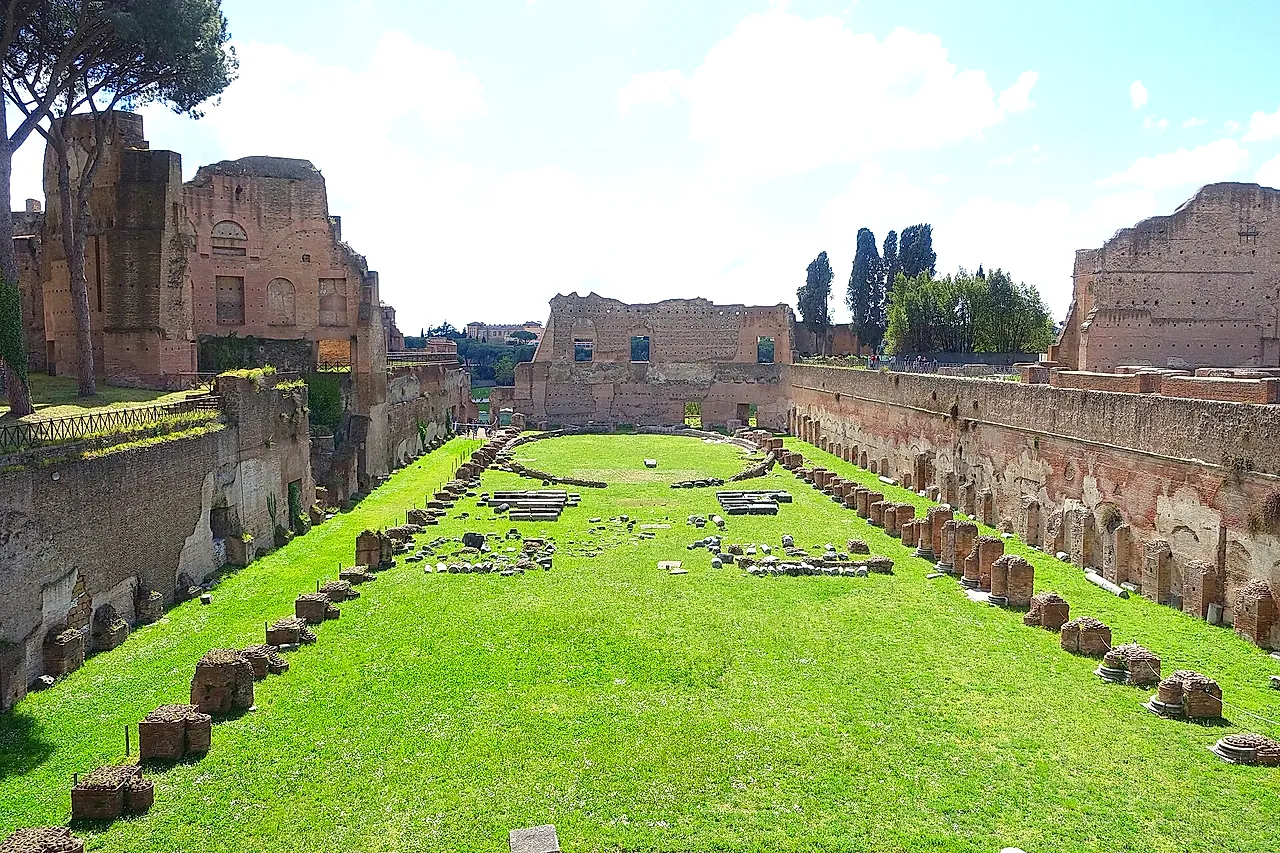
The Stadium is a long open space of 175 by 52 yards. Baedeker (1909) writes that it was probably a garden, and not, as was formerly supposed, an arena for races and athletic contests.
There are snack and drink machines near the Stadium, according to the Park.
The Farnese Gardens and the Palatine Museum
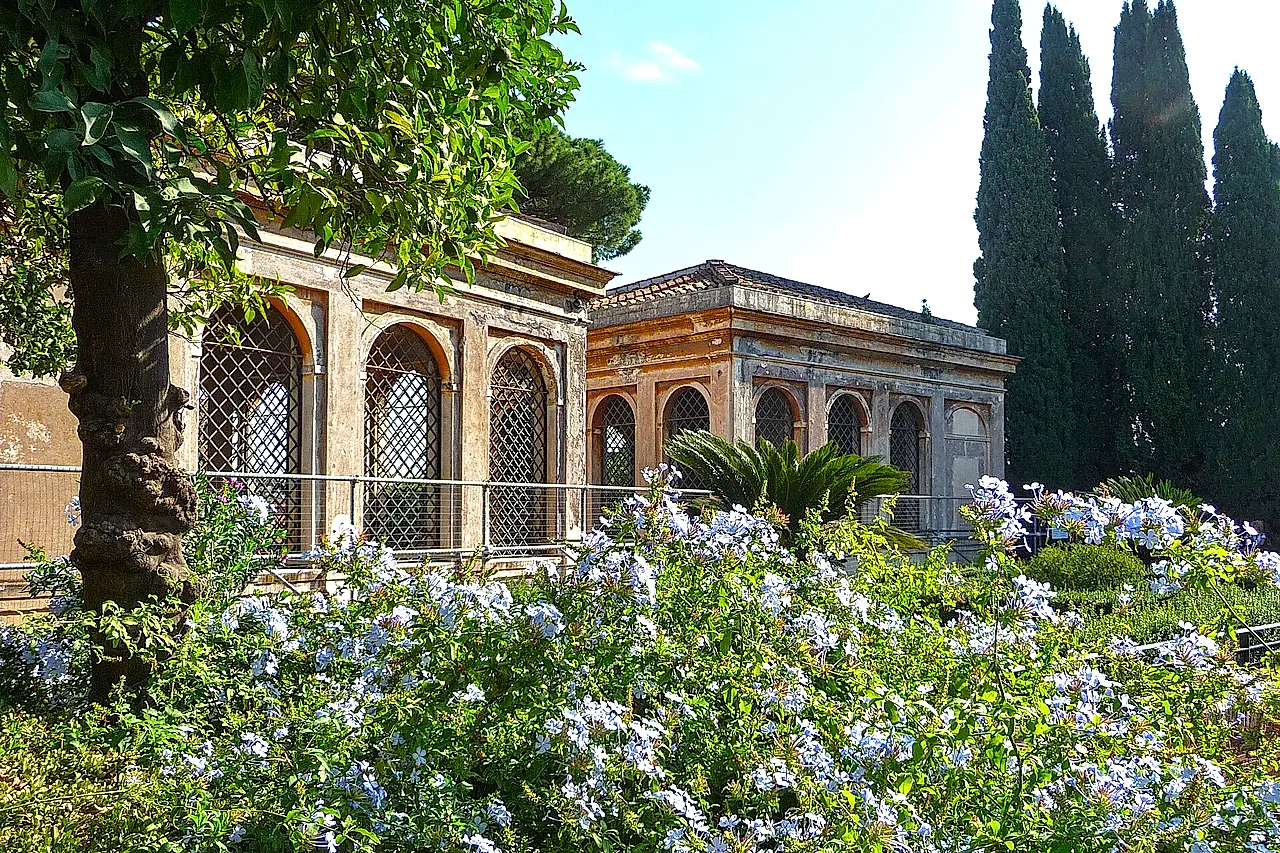
The Farnese Gardens were laid out under Paul III (1534-50), and the first excavations came with them. Napoleon III bought them in 1861 and the Italian state in 1870, according to Baedeker. Today the Farnese Aviaries host exhibitions.
The Palatine Museum holds finds from the excavations. It is a SUPER site, with the lower floor accessible and a limit of 20 people per floor.
The view of the Circus Maximus
Baedeker (1909) describes the Circus Maximus in the hollow between the Aventine and the Palatine, seen from the south side of the hill. The Park lists the Circus Maximus as managed by the City of Rome, outside the Park.
The official site does not say which point of the hill gives the view, so we give no route.
SUPER sites and the Imperial Forums
The SUPER sites are the Temple of Romulus, the Domus Tiberiana (exhibition rooms), Santa Maria Antiqua, the Curia Iulia, the Palatine Museum, the Aula Isiaca with the Mattei Loggia, the House of Augustus (closed on Mondays) and the Horrea Piperataria. The House of Livia is closed for restoration. Access is limited.
The Imperial Forums are included in every ticket. The passage from the Park to them is open every day from 9:00 to 18:00, according to the Park.